Desalination and sweetening of water
Advanced technologies for converting saltwater into a sustainable resource
The importance of water desalination in today's world
Considering the drought and the limitation of freshwater resources, the use of the vast salty water resources of seas and groundwater has become a strategic necessity. The main challenge in this path is the high energy consumption and the production of very salty wastewater (brine) in traditional methods.
Afra Sanat Kimia, focusing on process optimization, provides solutions that transform saline water into usable water for drinking, industrial, and agricultural purposes with minimal energy consumption and the least environmental impact.
Types of Desalination System systems
Thermal processes (with phase change)
These methods separate the salt by evaporating water and condensing it again.
- ✓MED: Multi-Stage Distillation (Multi-Effect Distillation)
- ✓MSF: Multi-Stage Flash Distillation
- ✓VCD: Vapor Compression Distillation
Membrane and electrical processes (without phase change)
In these methods, semi-permeable membranes or electric fields are used to separate salt.
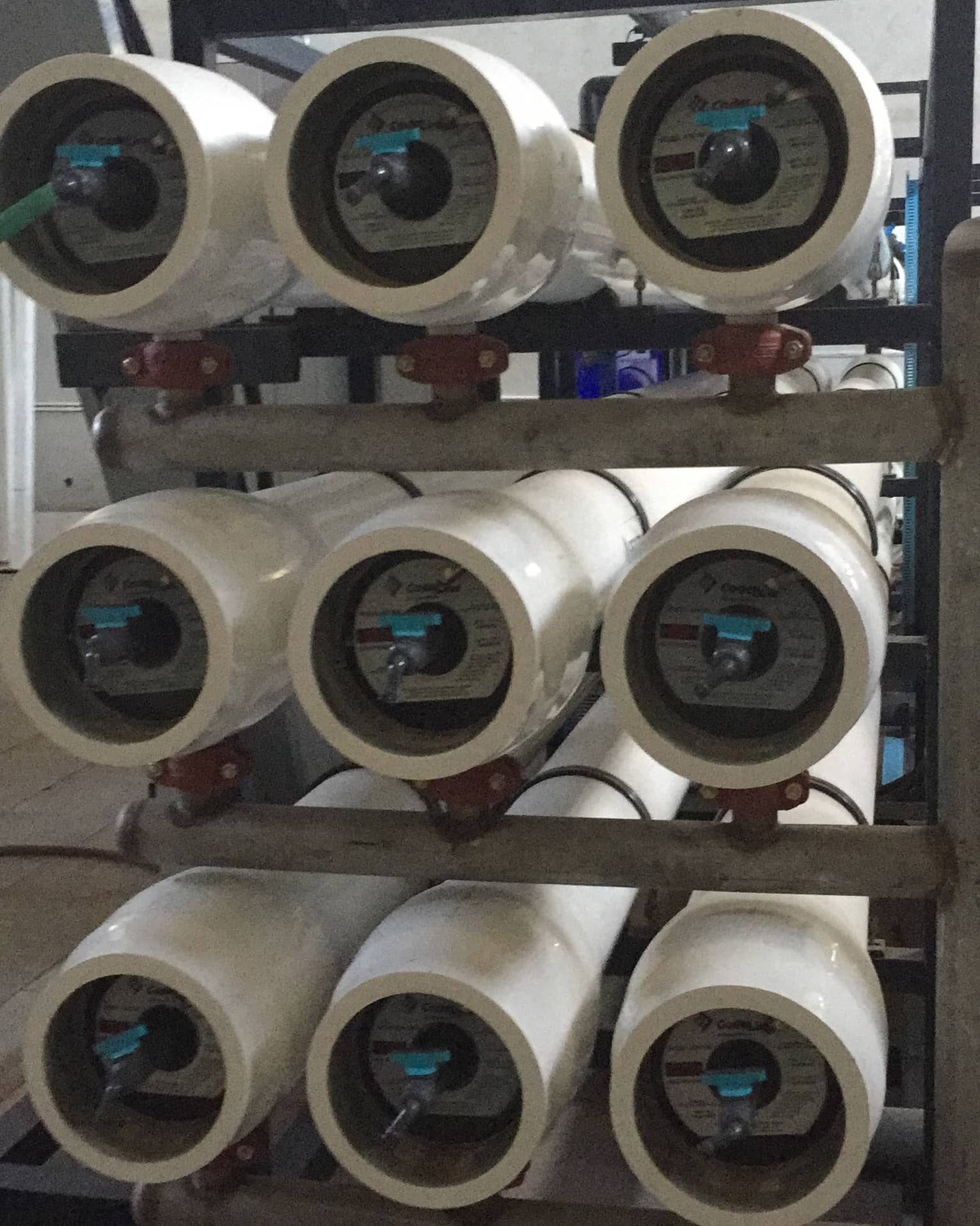
- ✓RO: Reverse Osmosis (Reverse Osmosis)
- ✓ED/EDR: Electrodialysis (Electro Dialysis)
- ✓ECR: Electromagnetic Electrolysis (Advanced Solution)
Advanced solution: Electromagnetic Electrolysis (ECR)

ECR: One Step Further in Desalination
The ECR system, an innovative solution by Afra Sanat Kimia, has been developed for examining and optimizing the desalination process by combining an electromagnetic field with the electrolysis process. In this method, electromagnetic waves increase the molecular motion of dissolved salts and make the ionic decomposition process possible with much lower electricity consumption.
The efficiency, energy consumption, and the amount of brine production in this solution depend on the feed water analysis, capacity, and the final process arrangement, and are determined after testing and engineering design.
Hybrid Systems: A Solution for Maximum Efficiency
We design hybrid systems by intelligently combining various technologies, which cover the disadvantages of each method and maximize their advantages.
ECR-RO hybrid system
In this model, the ECR system acts as a pre-treatment and removes the majority of the salt. This results in the feed water to the RO unit having lower salinity, which in turn increases the lifespan of the membranes, reduces energy consumption, and allows the use of low-pressure RO systems (Brackish Water) instead of expensive high-pressure models (Sea Water).
NF-MSF hybrid system
By using nanofiltration (NF) as a pretreatment, water hardness is removed and the operating temperature of the MSF unit is increased. This leads to a significant increase in efficiency and a reduction in scaling in thermal systems.
ECR System Technical Catalog
To receive complete technical information and feasibility plans related to Desalination System systems using the Electromagnetic Electrolysis (ECR) method, download the file below.
Download ECR catalog